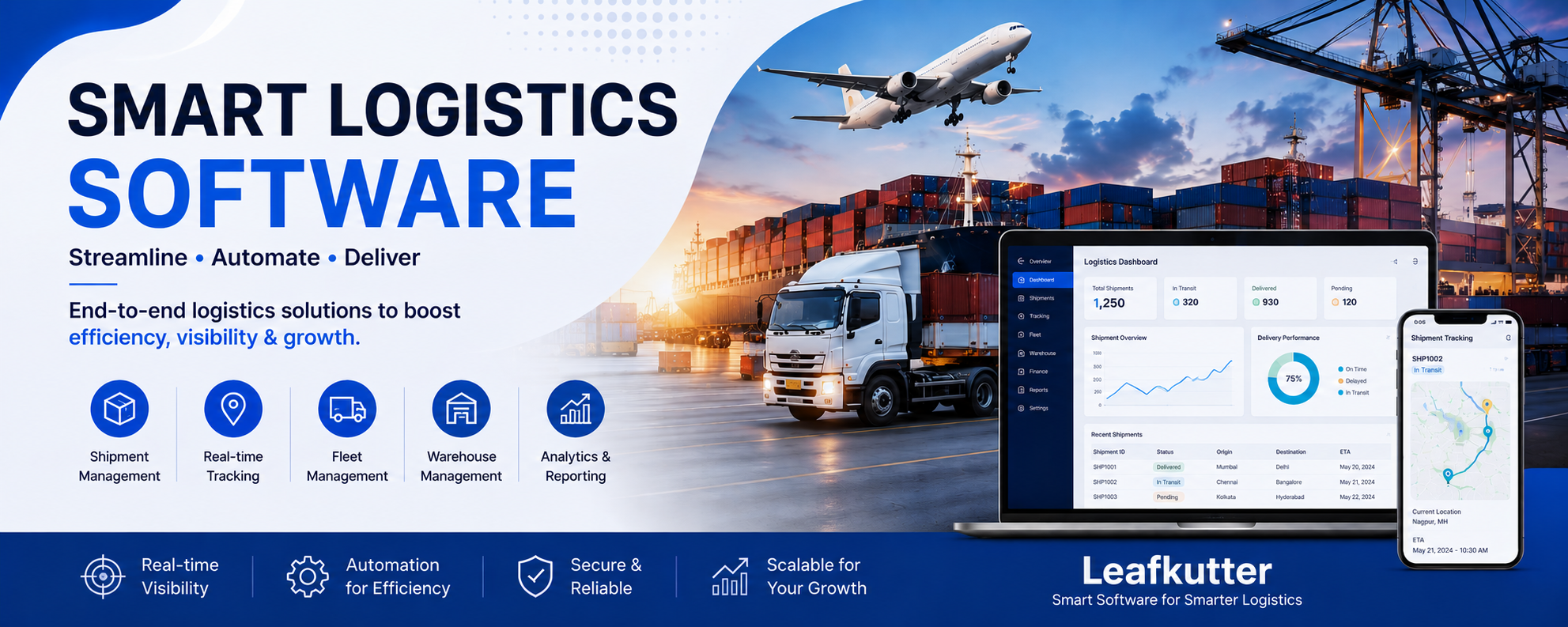
Introduction
The logistics industry in 2026 is more complex, competitive, and data-driven than ever before.
Rising fuel costs, faster delivery expectations, cross-border operations, and shrinking profit margins are putting pressure on logistics companies worldwide. Businesses that continue to rely on spreadsheets, manual dispatch systems, or disconnected tools are struggling to keep up.
Logistics software is no longer optional. It has become essential infrastructure for modern operations.
In this article, we explore why investing in logistics management software in 2026 is critical for growth and operational efficiency.
1. Rising Operational Costs Demand Smarter Control
Fuel prices continue to fluctuate. Labor costs are increasing. Maintenance expenses are unpredictable.
Without a centralized logistics system, tracking operational inefficiencies becomes difficult.
Modern logistics software helps you:
- Optimize routes to reduce fuel consumption
- Monitor vehicle performance
- Track idle time
- Reduce unnecessary operational expenses
Data-driven visibility directly impacts profitability.
2. Customer Expectations Are Higher Than Ever
Today’s customers expect:
- Real-time tracking
- Faster deliveries
- Transparent communication
- Accurate ETAs
Manual processes cannot consistently meet these expectations.
A logistics management platform enables:
- Live shipment tracking
- Automated notifications
- Delivery performance monitoring
- Faster issue resolution
Meeting customer expectations is no longer a competitive advantage — it is a requirement.
3. Multi-Region & Cross-Border Operations Require Centralized Visibility
As logistics companies expand, managing multiple fleets, warehouses, and delivery zones becomes complex.
Without centralized control, coordination breaks down.
Logistics software provides:
- Multi-fleet management
- Unified dashboards
- Centralized dispatch control
- Real-time operational visibility
This ensures seamless coordination across regions.
4. Manual Systems Limit Scalability
Spreadsheets and phone-based coordination may work for small fleets. But as operations grow, manual systems become bottlenecks.
Common challenges include:
- Dispatch errors
- Delayed decision-making
- Poor reporting accuracy
- Communication gaps
A structured logistics platform automates workflows, reduces human error, and enables scalable growth.
If your system requires more people every time you grow, it is not scalable.
5. Data-Driven Decision Making Is the New Standard
In 2026, logistics leaders are not guessing — they are analyzing.
With advanced reporting and analytics, logistics software helps companies:
- Measure fleet performance
- Track delivery success rates
- Monitor cost per shipment
- Identify operational inefficiencies
Data enables smarter strategic decisions and long-term planning.
6. Competitive Advantage in a Technology-Driven Market
The gap between technology-enabled logistics companies and traditional operators is widening.
Businesses that invest in digital infrastructure:
- Deliver faster
- Operate more efficiently
- Reduce costs
- Scale confidently
Those who delay digital transformation risk losing market share.
Conclusion: Logistics Software Is No Longer Optional
In 2026, logistics software is not just a tool — it is operational infrastructure.
It empowers companies to manage complexity, reduce costs, improve customer satisfaction, and scale sustainably.
If your logistics operations are growing, your systems must evolve as well.
The future of logistics belongs to companies that operate with visibility, automation, and data intelligence.
Call to Action Section (For Your Website)
Looking to modernize your logistics operations?
Discover how Leafkutter helps businesses gain full operational control with advanced logistics management software.
👉 Request a demo today
👉 Talk to our team
👉 See the platform in action